House & Structure Demolition
Houses, barns, garages, and outbuildings taken down, hauled off, and the site left clean, graded, and ready for its next use.
When a structure has reached the end of its life — a fire-damaged house, a barn that's started to fold, an old garage or a mobile home nobody's used in a decade — the job isn't just knocking it over. It's getting the whole thing off your property and leaving ground you can actually use.
We take the structure down in a controlled way, working from the machine rather than tearing blindly. Debris comes apart as it falls so metal, wood, shingles and concrete can be separated and hauled to the right place instead of everything going to one expensive pile. Where the job calls for it, we pull the foundation and break out the slab too.
Then we grade the footprint. This is the part most people don't think to ask about, and it's the difference between a finished job and a mess. A teardown that stops at 'the building is gone' leaves you a sunken, rutted patch of broken concrete. We backfill and level so what's left is clean, drains properly, and is ready for whatever comes next — a new build, a shop pad, or just pasture again.
Every teardown is different. Size, what it's built out of, how close it sits to things you want to keep, whether utilities are still live, and how much debris is actually in there all change the job. That's why demolition is always quoted after we've seen it — anyone giving you a firm number over the phone is guessing.
What's included
- Houses, barns, garages & outbuildings
- Mobile home & shed removal
- Foundation & slab removal
- Debris separated & hauled off
- Site backfilled & graded clean
- Fire and storm-damaged structures
See the work in action
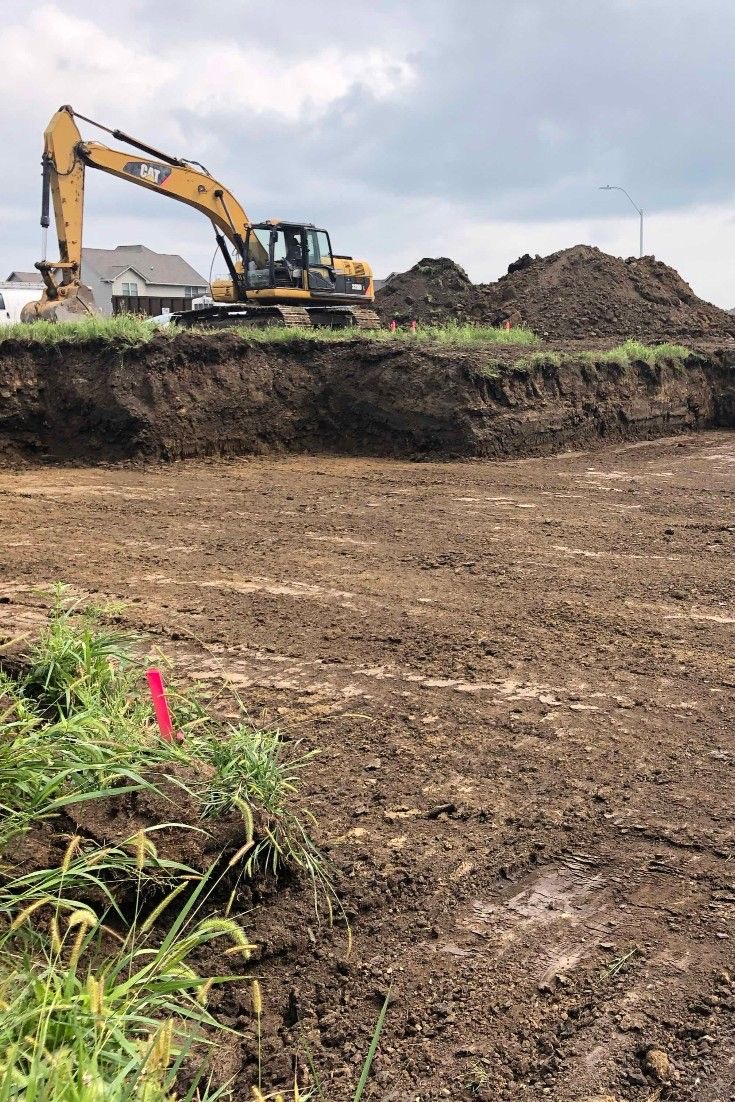
Licensed footage of the kind of work we do — photos and video from our own Kansas City jobs are added as we complete them.
How a teardown actually runs
Three stages, and the third one is the part that separates a finished site from an abandoned one.
Walk it and cut it dead
We walk the structure with you, agree what stays and what goes, and confirm every utility is disconnected and capped before anything moves. Gas, electric, water and septic all get verified — this is non-negotiable and it's on the checklist before a machine starts.
Bring it down controlled
The structure comes down in sequence, not all at once, so we can steer where material falls and keep it clear of fences, trees, wells and anything else you're keeping. Debris gets sorted as we go rather than after.
Haul off and grade
Everything gets loaded and hauled to the proper facility. Then we backfill the hole, level the footprint, and leave you clean ground that sheds water instead of collecting it.
What actually moves a demolition price
No two teardowns cost the same. These are the things we're looking at when we walk your property, so you know what we're weighing.
- Size and how it's built. A pole barn and a two-storey farmhouse of the same footprint are different jobs. Heavy timber, full masonry and multiple storeys all take longer and produce more to haul.
- Debris volume and disposal. Landfill and recycling fees are often the single biggest line on a demolition bill. A structure packed with old furniture, shingles and junk costs more than an empty shell of the same size — clearing it out beforehand genuinely saves you money.
- Access to the structure. If we can get equipment and trucks right up to it, the job moves fast. Tight lots, soft ground, narrow lanes, overhead lines or a structure wedged between things you're keeping all slow it down.
- Foundation, slab and basement. Taking the building only is one price. Breaking out a slab, pulling foundation walls or backfilling a full basement is meaningful extra work and material.
- Hazardous material. Anything built before roughly 1980 may contain asbestos in siding, tile or insulation. Testing is standard, and if it's present it has to be abated by a licensed abatement contractor before we touch it. We'll tell you straight if we think you need a test.
- What you want left behind. Rough-cleared is cheaper than build-ready. If you want the pad levelled and compacted for a new structure, that's more work than simply filling the hole.
Demolition — questions we get asked
Do I need a permit to demolish a building?
In most Kansas City metro jurisdictions, yes — a demolition permit is typically required, and utility disconnects usually have to be confirmed before it's issued. Requirements vary between counties and city limits, so check with your local building department early. We'll tell you what we've seen required in your area, but the permit is pulled in the property owner's name.
How long does a teardown take?
A shed or small outbuilding is often a single day. A typical house or barn including haul-off and grading usually runs a few days. Big structures, full basements or heavy debris loads take longer. We give you a realistic window with the quote, not a best case.
Do you handle asbestos?
We don't perform abatement ourselves. If your structure predates about 1980, it should be tested first, and anything found has to be removed by a licensed abatement contractor before demolition begins. We'll flag it during the walkthrough rather than discovering it halfway through.
What happens to the debris?
We separate it as it comes down and haul it to the appropriate facility — metal to scrap, clean concrete to recycling where we can, the rest to landfill. Nothing is buried on your property. Separating it properly is also how we keep your disposal cost down.
Will the site be usable when you're finished?
That's the point. We backfill and grade the footprint so you're left with level ground that drains, not a crater full of broken concrete. Tell us during the quote what the ground is for next and we'll finish it to suit.
Can you take out just part of a structure?
Yes. Partial demolition — dropping a collapsing lean-to off a sound barn, or taking an addition off a house you're keeping — is common work. It's more careful and slower than a full teardown, so it's priced on the specific job.
Tell us about your property
Send a few photos and the rough acreage and we'll get you a free estimate — usually within one business day. No deposit to book.